
Justin Levine
Counsel at Davis Polk & Wardwell LLP

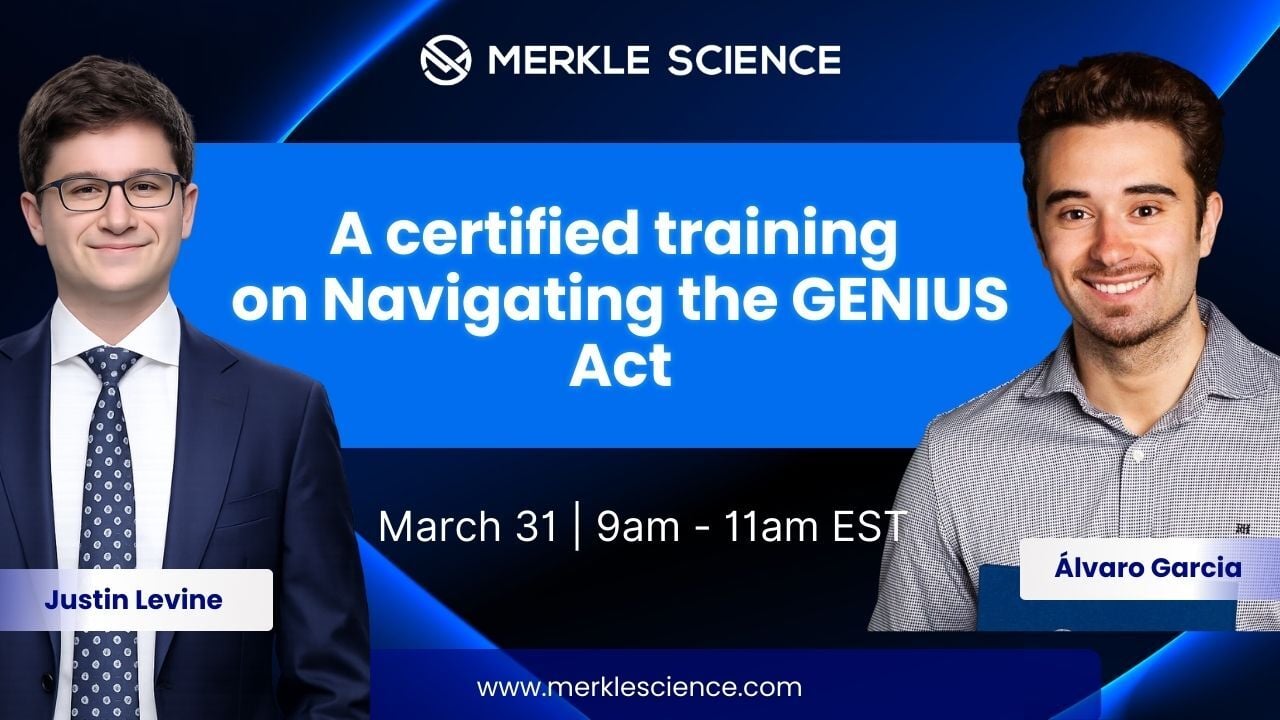
Date & Time: March 31, 9am - 11am EST
Duration: 2 Hours
Format: Live Online Certified Training
Assessment: Post-session test required
Certification: Certificates issued upon successful completion
With regulatory frameworks like MiCA, DORA, and evolving Travel Rule enforcement timelines converging around 2026, the operating environment for VASPs is more demanding than ever. This session brings clarity to:
The GENIUS Act marks a structural shift in how payment stablecoins are defined, regulated, and supervised in the United States. In 2026, stablecoin issuers are no longer preparing for regulation — they are operating within it.
This 2-hour certified training provides a structured, practical understanding of the Act and its real-world compliance implications. Designed for legal teams, compliance leaders, risk officers, and stablecoin operators, the session moves from statutory language to operational execution.
Participants who successfully complete a short post-training assessment will receive an official certification.
✅ How the GENIUS Act defines payment stablecoins, what is in scope and out of scope, and the formal exclusion from securities treatment, including the prohibition on interest or yield
✅ How federal and state licensing pathways operate in practice, allocation of supervisory authority, and strategic considerations when selecting a regulatory regime
✅ The prudential and operational compliance blueprint covering reserves, asset composition, redemption rights, liquidity governance, and internal controls
✅ Integration into AML, CFT, and sanctions frameworks, including required compliance capabilities and the evolving role of Treasury and FinCEN in shaping implementing regulations
✅ The enforcement framework, including supervisory suspension, revocation, and removal authority, and how enforcement risk should inform governance design
✅ What provisions are already in force in 2026 versus what remains subject to implementing rules and regulatory clarification
✅ How to implement real-time transaction monitoring to detect illicit exposure, manage counterparty risk, and maintain a defensible compliance posture
✅ How macro-level token monitoring can surface ecosystem concentration, distribution shifts, counterparty exposure trends, and emerging systemic risks
Counsel at Davis Polk & Wardwell LLP
.png?width=500&height=500&name=%C3%81lvaro%20Garc%C3%ADa%20(2).png)
Director of Business Operations, Merkle Science